

Cost #1: Compliance Risks
IDEA and FAPE don’t take sick days. Under the Individuals with Disabilities Education Act (IDEA), every IEP service is a legal promise to provide a Free Appropriate Public Education (FAPE). But if required services aren’t delivered, (say a student misses therapy hours because no substitute was available), the district is essentially out of compliance. In plain terms, a broken IEP promise can mean a violation of a student’s rights.
Failing to provide IEP-mandated support isn’t just a paperwork issue; it’s considered a denial of FAPE. Parents notice when their child isn’t getting what’s outlined in the IEP, and they have every right to push back. Under IDEA, parents can file complaints or request due process hearings, even lawsuits, if they believe the school isn’t meeting its legal obligations.
This isn’t rare. a recent survey in New York City found nearly 9,000 special education students were not receiving one or more of their legally mandated services due to massive staffing shortages, each one a potential violation. Repeated gaps can trigger investigations, settlements, or even federal scrutiny.
Compliance isn’t red tape; it’s protection for students and districts. Covering every IEP minute is the surest safeguard.
Cost #2: Financial Fallout
Skipping a service might look like savings today, but tomorrow it’s a bill. Districts often owe compensatory education, i.e. make-up services or instructional time to compensate for what was missed. In some cases, districts must even fund private school placements if the public school failed to deliver an appropriate education. None of that comes cheap.
San Diego Unified learned this the hard way, spending $2 million in a single year to settle 128 special education cases. Much of that settlement money went toward reimbursing parents for services that should have been provided in the first place, including private therapy sessions, even specialized school tuition.
Legal costs pile on too. San Diego Unified, for instance, spends over half a million dollars a year just on its own special ed lawyers, not counting what it pays for parents’ attorneys in settlements.
One administrator summed it up: “The money I’m spending on attorneys is money I can’t spend in other ways…now I can use those dollars to support teaching and learning."
Meanwhile, when staff shortages force districts to plug holes with emergency measures, it often comes at a premium. Due to a therapist shortage, New York City had to contract with numerous private agencies to serve kids a “patchwork of contracted services” that cost the city nearly $900 million in one year.
💸 Don't be the next cautionary tale. Spindle will step in when and where you need placements most.
Cost #3: Student Outcome Impact
Each IEP service exists for a reason: to help a child reach their goals. When those supports vanish, progress stalls. Over weeks and months, lost minutes can lead to lost skills, stalled progress, or even regression in key areas. You might see reading levels stagnate or communication skills slip backwards. These are tangible setbacks in a child’s development.
Missed IEP services hinder academic growth. If a student doesn’t receive the help they need in reading, math, behavior, or any area specified, they often struggle to meet their IEP goals or keep up with peers. Educators commonly report lower grades and missed learning opportunities when support hours are not delivered. Or consider a medically fragile student whose IEP requires a one-on-one nurse: if that nurse position is unfilled one day, the student might have to stay home, missing instruction entirely.
The ripple effects hit classmates and teachers too: disrupted routines, behavioral flare-ups, and extra stress on staff already stretched thin.
Cost #4: The Mountain of Missed Minutes
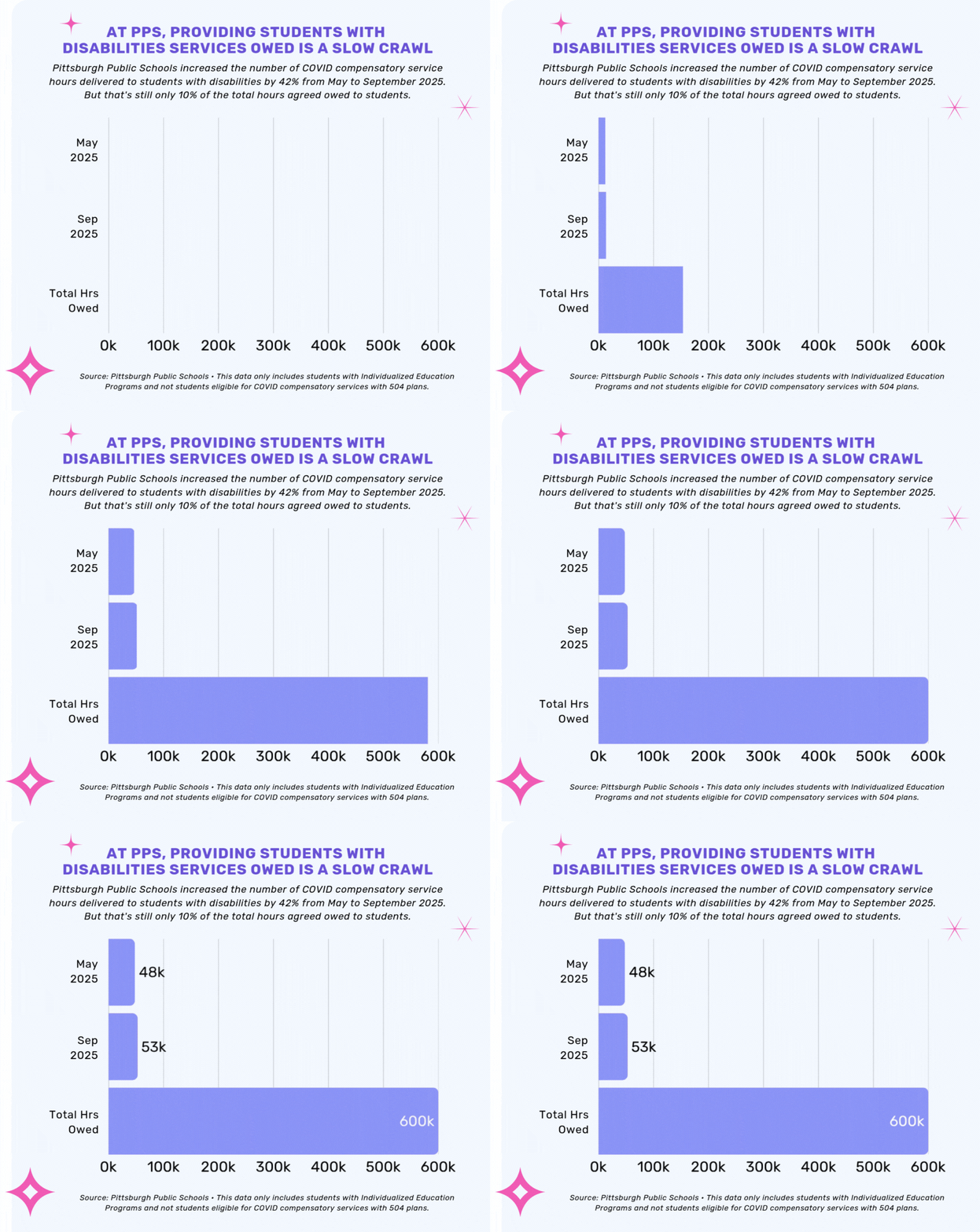
Pittsburgh Public Schools identified over 600,000 special education service hours that roughly 2,200 students missed during the COVID-19 disruptions. The district has been scrambling to offer extra programs (from weekend retreats to tutoring sessions) to make up for the lost time. Despite these efforts, by late 2025 they had delivered just over 10% of the total hours they owed.
This example may be extreme (the pandemic was an extraordinary situation), but it underscores a universal truth: once service time is lost, it is incredibly hard and costly to recover.
There have been cases where multiple students in a district all missed their therapy minutes, resulting in a system-wide corrective action plan or class action settlements to fix the issue. In each of these scenarios, the situation started with unfilled positions or absences, and ended with a heavy corrective workload and sometimes public embarrassment for the district.
The smarter play: stop the gap before it starts.
The Fix: Proactive Substitute Coverage
All these costs and risks are preventable. School districts can protect themselves and, more importantly, their students by having a safety net of specialized substitute coverage. Think of it as an insurance policy for IEP minutes, one that kicks in whenever a staff vacancy or absence threatens to derail services.
That’s exactly how Spindle works. Unlike generic substitute pools, Spindle’s network consists of experienced paraprofessionals, one-on-one aides, registered behavior technicians, school nurses, and other support staff who are trained to step into special education settings at a moment’s notice. It’s like having a bench of special teams players ready for when the game gets tough, except the “game” here is ensuring every student’s IEP is followed, every day.
What does proactive coverage look like in practice?
Instead of scrambling, administrators reach out to their specialist, and Spindle does the rest—keeping services, compliance, and learning on track. The payoff:
- IEP Compliance, 24/7. Stay aligned with IDEA and FAPE requirements; avoid non-compliance findings.
- Lower costs. It’s far cheaper to pay a qualified sub now than fund legal settlements later.
- Continuity for Students: Consistency is everything for student growth. With trained substitutes, students with IEPs continue to receive the support they need without interruption, leading to better academic and behavioral outcomes.
- Peace of Mind for Staff and Families: Teachers and therapists can take necessary leave or address emergencies without guilt, knowing their students are in good hands. Parents feel reassured that the school is meeting its commitments. Trust and communication improve all around.
Spindle’s model is a friendly, high-urgency approach to this challenge. By partnering with a specialized substitute service, districts flip the script from reactive to proactive. That shift not only saves a lot of stress, it could very well save the district thousands in the long run.
Final Thought: Make Every IEP Minute Count
The hidden costs of missed IEP minutes are anything but hidden. They surface as lawsuits, lost funds, and lost learning. But with proactive coverage, districts can flip the script—from reactive crisis management to reliable continuity.
Investing in the ability to cover every IEP service isn’t optional; it’s smart leadership. With Spindle’s specialized network, schools can keep their promises, protect their budgets, and—most importantly—ensure every student with an IEP gets the consistent support they deserve.
